- sales@zepel.co

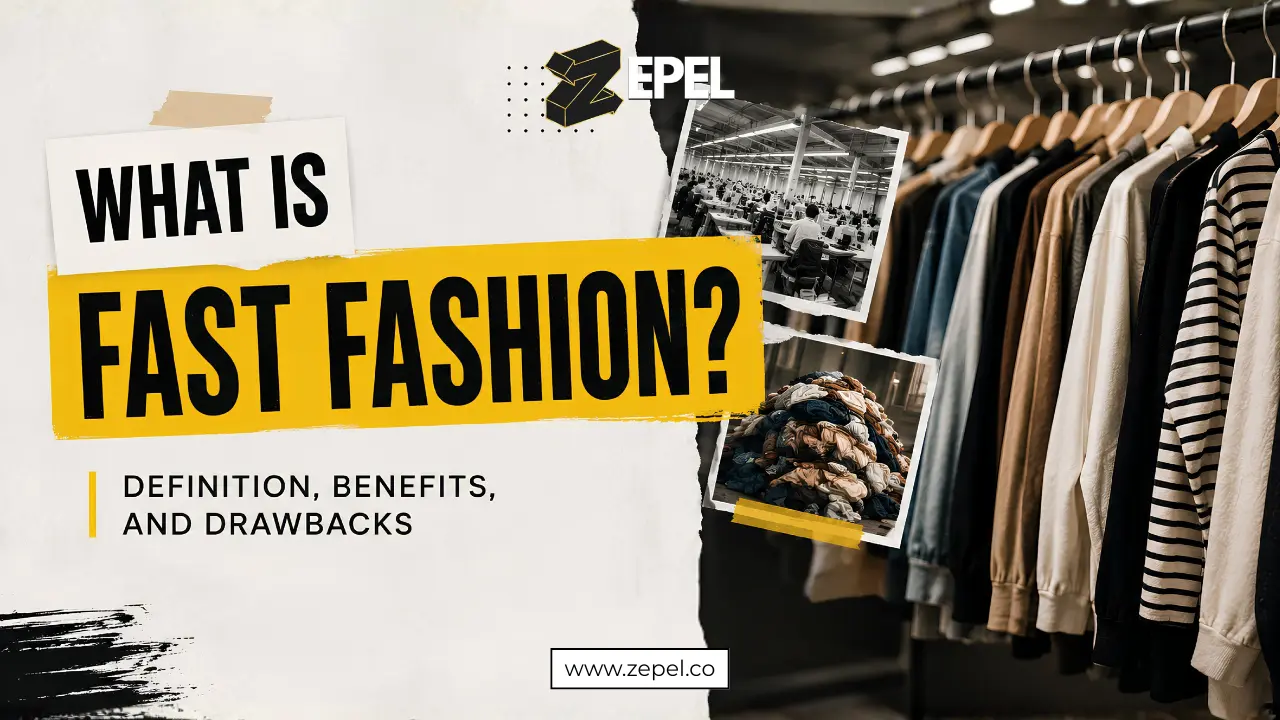
A new fashion trend appears on social media today. Within a few weeks, thousands of shoppers across the UK and Europe can buy a similar version online, often at surprisingly low prices. This speed and affordability have transformed the way consumers shop for clothing, but they have also sparked growing concerns about waste, sustainability, and supply chain practices. The rise of fast fashion has made clothing more accessible than ever before, yet it has also raised important questions about the future of the global fashion industry. Consumers, regulators, and brands are increasingly examining how garments are produced, how often they are purchased, and what happens to them after use. In this blog, we will explore what is fast fashion, how the fast fashion industry operates, the benefits and drawbacks of this business model, its impact on sustainability, and what fashion brands can learn as the industry evolves.
The simplest answer to what is fast fashion is this: it is a business model that focuses on designing, manufacturing, and selling trendy clothing as quickly and inexpensively as possible.
The fast fashion definition revolves around speed. Rather than creating seasonal collections months in advance, brands continuously release new products based on emerging consumer demand and social media trends.
The fast fashion meaning can be understood through three key characteristics:
This approach allows brands to respond quickly to changing consumer preferences while encouraging repeat purchases throughout the year.
Today, fast fashion has become a dominant force within the global fashion business, influencing how clothing is designed, manufactured, marketed, and sold.
To understand what is fast fashion, it is important to understand the underlying fast fashion business model.
Traditional apparel brands typically work with seasonal collections. In contrast, fast fashion brands introduce new styles every few weeks.
The process generally involves:
A highly optimized fashion supply chain enables brands to move products from concept to consumer faster than ever before.
Companies invest heavily in sourcing networks, production planning, inventory management, and supply chain visibility to support this model.
Many modern sourcing platforms help brands improve manufacturing efficiency through structured apparel sourcing solutions and supplier management processes.
The success of fast fashion is largely driven by changing consumer behavior.
Modern shoppers want:
The growth of social media has accelerated this demand. Consumers can see a trend online and purchase a similar product almost immediately.
This combination of affordability and accessibility helped the fast fashion industry expand rapidly across Europe and the UK.
According to McKinsey’s State of Fashion reports, speed-to-market and supply chain responsiveness remain key competitive advantages for fashion retailers worldwide.
One of the biggest advantages of fast fashion is affordability.
Consumers can purchase stylish clothing without paying premium designer prices. This has made fashion more accessible to a wider audience.
Fashion trends now move faster than ever.
The fast fashion industry allows consumers to access current trends almost immediately rather than waiting for seasonal collections.
The textile industry, manufacturing sector, logistics providers, and retail businesses all benefit from increased production activity.
The growth of fast fashion brands has created jobs throughout the global fashion supply chain.
Many innovations in supply chain management have emerged from the demands of fast fashion.
Brands continuously invest in:
These improvements often benefit the wider fashion industry as well.
One of the biggest criticisms of fast fashion is the amount of waste it generates.
Consumers often purchase more clothing than they need because products are inexpensive and trends change quickly.
This contributes significantly to global fashion waste, with millions of garments ending up in landfills each year.
The fast fashion environmental impact extends beyond waste.
Large-scale production requires:
The production of fabrics, dyeing processes, and textile manufacturing activities can place substantial pressure on environmental resources.
This is one of the main reasons people ask, why is fast fashion bad?
The need for speed places significant demands on the global fashion supply chain.
Manufacturers are expected to:
Without responsible sourcing practices, these pressures can affect sustainability goals and supply chain resilience.
Another reason people question why is fast fashion bad is its impact on consumer behavior.
The constant release of new products encourages frequent purchasing and shorter product lifecycles, making clothing more disposable than durable.
Improve supply chain efficiency through strategic apparel sourcing.
The conversation around the fast fashion environmental impact has become one of the most important topics in modern fashion.
Several factors contribute to this impact:
The production of textiles and garments requires significant amounts of water, particularly during cotton cultivation and fabric dyeing.
Global manufacturing and transportation networks generate emissions throughout the fashion supply chain.
The rise of low-cost clothing has contributed to growing levels of fashion waste worldwide.
The production of textile products consumes energy, chemicals, and raw materials that can place pressure on natural resources.
According to Textile Exchange, the fashion sector continues to explore more sustainable materials and production methods to reduce environmental impact.
Growing awareness of environmental challenges has made sustainability a major focus in the Supply chain of the UK fashion industry.
Consumers increasingly want:
As a result, brands are investing in:
Many companies are also adopting stronger sustainable sourcing policies to improve environmental performance throughout their operations. The relationship between fashion and sustainability is expected to become even more important over the next decade.
The success of any fast fashion business depends on an efficient fashion supply chain.
A modern supply chain includes:
Brands that can manage these activities effectively gain significant competitive advantages.
Many retailers are investing in technology to improve forecasting, production planning, and supplier collaboration throughout the global supply chain.
Companies seeking reliable manufacturing partnerships often work with verified supplier networks to improve sourcing transparency and production efficiency.
Despite the criticism surrounding fast fashion, there are valuable lessons for fashion businesses.
Brands can learn the importance of:
However, modern fashion brands must balance speed with sustainability.
The future of the fashion business will likely depend on combining operational efficiency with responsible sourcing and production practices.
The future of fast fashion will likely look different from its past.
Consumers are becoming more conscious of:
At the same time, governments and industry organizations are introducing regulations focused on transparency and sustainability.
This shift may encourage brands to:
The next generation of fashion businesses will need to balance affordability, speed, and sustainability more effectively than ever before.
Understanding what is fast fashion is essential for consumers, retailers, and sourcing professionals alike. While the model has transformed the global fashion industry through affordability and speed, it has also highlighted the need for greater responsibility across sourcing, production, and consumption.
Are you a fashion brand looking for a reliable sourcing partner that prioritizes quality, transparency, and sustainability? Zepel connects global brands with trusted manufacturers and end-to-end sourcing support. Contact our team today and let’s start building your next apparel project.
Fast fashion is a business model that produces trendy clothing quickly and affordably so consumers can buy the latest styles at lower prices.
Many critics argue that fast fashion contributes to overconsumption, environmental challenges, and growing levels of fashion waste, making sustainability more difficult to achieve.
The most commonly recognized fast fashion brands include Zara, H&M, and Shein due to their rapid product cycles and global reach.
The 3-3-3 rule encourages consumers to create multiple outfits using a small number of clothing items, helping reduce unnecessary purchases and promote more mindful consumption.

Get in touch