- sales@zepel.co


A single sourcing decision can determine whether a fashion collection becomes a bestseller or a costly mistake. Imagine investing months into product development only to discover that your manufacturer cannot scale production, your materials arrive late, or your shipping costs wipe out your margins. These challenges are common in the apparel industry, which is why global sourcing has become a strategic priority for brands looking to stay competitive.
Today’s most successful fashion businesses rarely rely on a single supplier, factory, or country. Instead, they build international sourcing networks that give them access to specialized expertise, better production capabilities, competitive pricing, and greater supply chain resilience. In this blog, we’ll explore how international sourcing works, the role of procurement and supply chain management, the process brands follow when selecting overseas suppliers, and the key benefits that make Global apparel sourcing an essential strategy for modern apparel businesses.
At its core, global sourcing is the practice of purchasing materials, products, or manufacturing services from suppliers located in different countries. Rather than relying on a single domestic supplier, businesses evaluate international options to find the best combination of quality, expertise, capacity, pricing, and reliability.
In the UK apparel industry, sourcing decisions often involve:
The objective is not simply to find the lowest-cost supplier. Successful sourcing focuses on creating long-term value while maintaining product quality, consistency, and operational flexibility.
For fashion brands operating in competitive markets such as the UK and Europe, sourcing internationally has become a critical part of modern business strategy.
Global Sourcing Fact: Pakistan is a trusted leading global sourcing partner for leading apparel brands in the world. Learn more.
Consumer expectations have changed dramatically over the past decade.
Customers now expect:
Meeting all of these expectations through a single supplier can be difficult.
This is why many apparel businesses build sourcing networks across multiple regions. Different countries often offer unique strengths in manufacturing, textile production, craftsmanship, or product specialization.
For example:
A diversified sourcing strategy allows brands to leverage these strengths while reducing dependency on any single supplier or region.
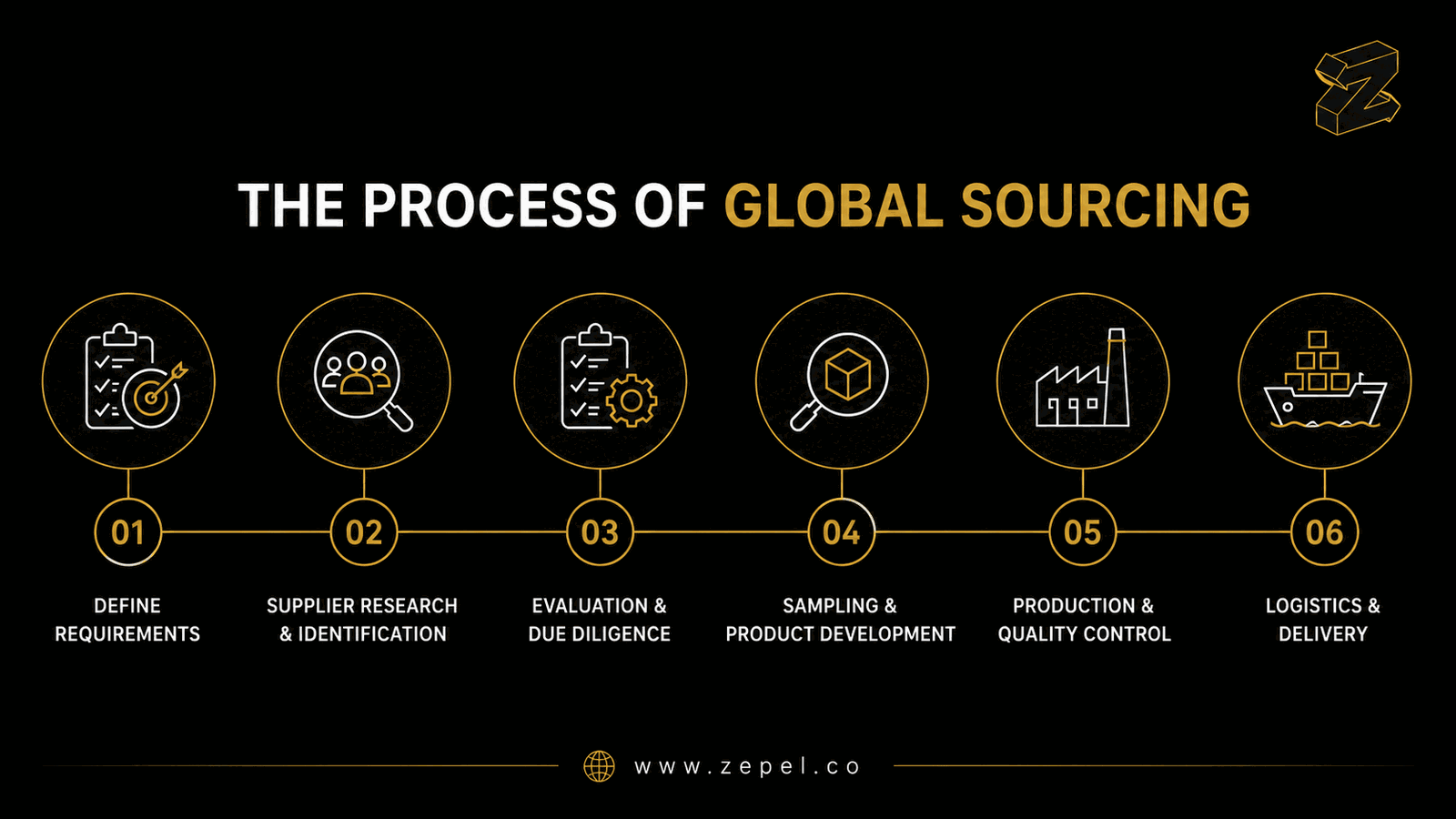
Every sourcing project begins with clear objectives.
Before contacting suppliers, brands must identify:
This stage lays the foundation for a successful procurement strategy and helps prevent costly mistakes later in the process.
Once requirements are established, the search for suitable suppliers begins.
Potential suppliers are evaluated based on:
Many brands use specialized procurement services or sourcing platforms to streamline supplier discovery and reduce sourcing risks.
Companies seeking reliable manufacturing partners often benefit from established supplier networks that have already been vetted for quality and compliance.
If you are an apparel brand looking for reliable manufacturing partners, let’s start your project with Zepel.
A supplier may look promising on paper, but product samples reveal the true picture.
Sampling allows brands to assess:
This stage is often where sourcing decisions are finalized.
Strong procurement management requires careful evaluation before moving into production.
After supplier selection, brands move into production planning.
This phase includes:
A well-structured procurement system helps ensure communication remains clear between buyers and manufacturers throughout the production cycle.
Production is only half the journey.
Finished products must move efficiently through:
This is where procurement and logistics become closely connected.
Without proper logistics planning, even high-quality products can arrive too late to meet market demand. Zepel partners with Pioneer Express Ltd to offer inhouse logistics support for seamless doorstep deliveries.
Many people think procurement is simply about purchasing products.
In reality, procurement plays a much broader role.
Modern procurement and supply chain management includes:
A strong procurement function creates long-term value by helping brands build reliable supplier relationships and improve operational performance.
Leading fashion businesses increasingly invest in strategic procurement because supplier quality often has a direct impact on customer satisfaction.
Procurement and supply chain operations are deeply interconnected.
While procurement focuses on acquiring goods and services, the broader supply chain manages the movement of products from raw materials to finished goods.
Successful businesses align sourcing, manufacturing, logistics, and inventory planning under one unified strategy.
Strong collaboration between procurement and supply chain teams helps businesses:
This integration has become increasingly important as global supply chains become more complex.
Not every country specializes in the same products.
International sourcing gives brands access to manufacturers with specific technical expertise, production capabilities, and industry knowledge.
This is especially valuable for apparel brands developing specialized product categories.
One of the most recognized advantages of sourcing internationally is cost efficiency.
However, successful brands focus on total value rather than lowest price.
Factors such as quality, consistency, logistics costs, and supplier reliability often have a greater impact on profitability than unit pricing alone.
As businesses grow, production demands increase.
International supplier networks provide flexibility and scalability that many domestic suppliers cannot offer.
This allows brands to expand product lines and enter new markets without major manufacturing constraints.
Relying on a single supplier creates vulnerability.
Natural disasters, political instability, labor shortages, or shipping disruptions can quickly affect production schedules.
Diversified sourcing networks help businesses spread risk across multiple suppliers and regions.
Many suppliers actively contribute to product development.
Manufacturers often introduce:
These insights can create competitive advantages for brands seeking innovation.
Sustainability has moved from a marketing initiative to a business requirement.
Consumers increasingly expect brands to demonstrate transparency throughout their sourcing and manufacturing operations.
As a result, sustainable procurement has become a major focus across the fashion industry.
Today, brands evaluate suppliers based on:
Many businesses are formalizing their sustainable fashion commitments through dedicated sustainable sourcing policies that guide supplier selection and performance evaluation.
According to Textile Exchange, responsible sourcing practices continue to play an increasingly important role in the future of textile production.
One of the biggest sourcing challenges is identifying suppliers that consistently meet quality and delivery expectations.
Without proper due diligence, brands risk:
The more suppliers involved, the more complex operations become.
Coordinating production, logistics, quality control, and supplier communication across multiple countries requires structured processes and experienced management.
Brands face increasing pressure to demonstrate ethical and environmental responsibility.
Failure to meet compliance requirements can result in reputational damage and operational risks.
Shipping disruptions, customs delays, and freight cost fluctuations continue to affect global trade.
This makes effective procurement logistics planning more important than ever.
Technology has dramatically improved how businesses manage supplier relationships and procurement activities.
Modern sourcing organizations increasingly use:
These tools provide greater visibility across supplier networks while supporting better decision-making.
Many sourcing teams also use specialized apparel sourcing solutions to improve supplier discovery, qualification, and production oversight.
According to the latest State of Fashion research by McKinsey, supply chain resilience and sourcing flexibility remain top priorities for fashion executives worldwide.
For modern apparel brands, sourcing is no longer just a purchasing activity—it is a strategic business function that directly influences quality, profitability, scalability, and customer satisfaction. The brands that build strong supplier relationships and invest in effective procurement processes are often the ones best positioned for long-term success.
Looking for a trusted partner to simplify apparel sourcing and supplier management? Zepel connects fashion brands with verified manufacturers and provides end-to-end sourcing support to help you build stronger, more resilient supply chains.
Global sourcing is the practice of obtaining products, materials, or services from suppliers located in different countries to improve quality, reduce costs, and access specialized expertise.
Procurement helps businesses manage supplier relationships, negotiate contracts, monitor performance, and ensure sourcing decisions support long-term business goals.
Benefits include access to specialized expertise, cost optimization, increased production capacity, risk diversification, and improved innovation opportunities.
Sustainable procurement involves selecting suppliers based on environmental, social, and ethical performance in addition to cost and quality considerations.
Effective procurement improves supplier reliability, operational visibility, inventory management, and overall supply chain efficiency.

Get in touch