- sales@zepel.co

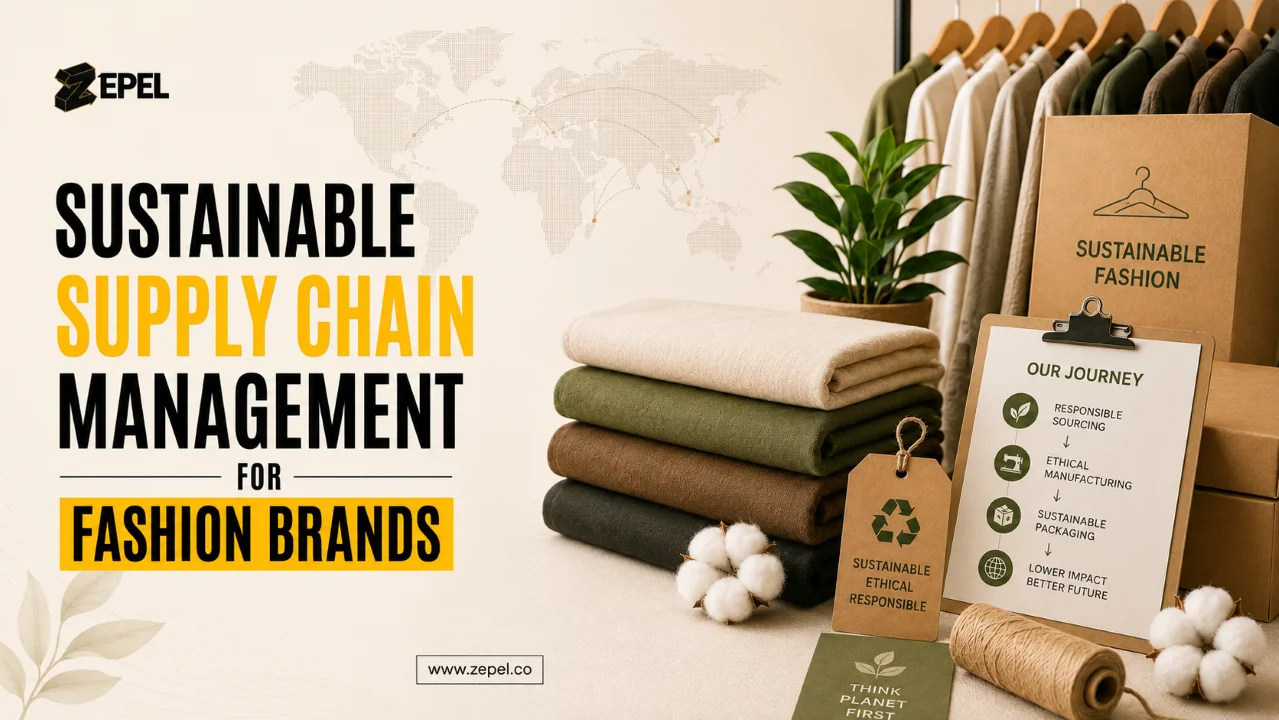
The fashion industry is one of the world’s largest polluters, and pressure is building from every direction – regulators, retailers, and consumers are all demanding proof of sustainability, not just promises. Upcoming EU regulations ban the destruction of unsold stock by 2026, Extended Producer Responsibility legislation is shifting waste management costs to brands, and the EU’s Digital Product Passport initiative will require fashion brands to provide full supply chain traceability data including carbon footprint breakdowns linked to QR codes. For fashion brands, sustainable supply chain management is no longer optional. It is a commercial survival requirement.
This guide covers what sustainable supply chain management means, why it matters for brand reputation, and the practical steps to build one from the ground up.
Sustainable supply chain management is the integration of environmental, social, and ethical considerations into every stage of a product’s journey — from raw material sourcing through manufacturing, logistics, and final delivery. In the context of fashion, it means making deliberate decisions at every step that reduce carbon emissions, protect natural resources, uphold worker rights, and minimise waste.
Traditional manufacturing dumps toxic chemicals into waterways, overuses natural resources, and creates millions of tons of textile waste. Sustainable supply chain management changes that. Brands that choose organic fabrics, water-efficient dyeing processes, and responsible sourcing drastically reduce their environmental impact.
For fashion brands, sustainable supply chain management sits across three core dimensions: environmental impact, social responsibility, and supply chain transparency. Getting all three right is what separates genuine sustainability from greenwashing.
Brands that ignore sustainability face supply chain disruptions, rising material costs, and changing consumer expectations. More shoppers want transparency, ethical production, and environmentally friendly materials. If your brand cannot meet those expectations, customers will spend their money elsewhere.
Fashion brands that build verifiable, transparent supply chains consistently command stronger consumer loyalty, higher price premiums, and greater retail buyer confidence. The inverse is also true — brands exposed for unsustainable practices face boycotts, regulatory penalties, and permanent reputational damage.
New regulations require brands to report on unsold textiles and eliminate stock destruction by 2026. Extended Producer Responsibility legislation is shifting the financial burden of textile waste from taxpayers to fashion brands. Brands that have not begun building sustainable supply chain infrastructure are already behind — not just ethically, but legally.
Sustainable supply chain management begins at the source. Fashion brands that want to build a more sustainable supply chain should prioritise eco-friendly materials including recycled polyester, Tencel, and organic cotton — materials that are less harmful to the environment and meet growing consumer demand for sustainable fashion.
Key sustainable raw materials to consider:
The manufacturing stage accounts for the largest share of a fashion brand’s environmental impact and social risk. Choosing the right manufacturing partner is the single most consequential sustainability decision a brand makes.
Brands should ensure fair wages and safe working conditions for all workers throughout their supply chains by vetting suppliers based on ethical criteria, ensuring that sustainability efforts extend beyond environmental impact.
Certifications to require from manufacturing partners: ISO 9001, BSCI, SEDEX, WRAP, OEKO-TEX Standard 100, and GOTS for organic lines. Each certification is independently audited, providing verifiable proof rather than supplier self-assessment.
Zepel works exclusively with pre-vetted, quality-assured manufacturing partners in Pakistan who hold internationally recognised ethical and quality certifications — giving fashion brands a verified, sustainable supply chain foundation from day one. Book a free sourcing consultation at Zepel
Sustainable fashion is no longer defined by intent — it is defined by proof. As regulations tighten and consumer expectations rise, brands must move beyond fragmented sourcing and embrace end-to-end traceability that connects fibre to finished product.
Practical steps toward transparency include mapping your full supplier base (including tier 2 and tier 3 suppliers), publishing your supplier list publicly, and working with manufacturers who provide audit documentation. The EU Digital Product Passport, coming into force progressively from 2026, will make this level of traceability a legal requirement for fashion brands selling in European markets.
Sustainable logistics and supply chain management covers how goods are transported from factory to customer — and the emissions generated in the process. For fashion brands sourcing internationally, practical steps include:
Pakistan’s GSP+ status with the EU and UK reduces import duties to zero on qualifying apparel — removing a key cost pressure that often pushes brands toward faster, more carbon-intensive shipping options.
Brands are building circular fashion models that emphasise recycling, repairing, and repurposing materials and garments to reduce waste and conserve resources. For fashion brands, this means designing for longevity from the start — specifying durable constructions, offering repair services, and building resale or recycling programmes into the brand model.
H&M and Syre’s $100 million venture aims to scale textile-to-textile polyester recycling, and Inditex committed to buying 70% of Ambercycle’s recycled polyester output — demonstrating that circular models are now mainstream commercial strategy, not niche differentiation.
Building a sustainable supply chain is not a single decision — it is a series of decisions made at every stage of production, from the raw materials you specify to the manufacturer you partner with, the logistics you use, and the end-of-life plan for your product. Fashion brands that build these foundations now are positioning themselves for the market that 2026 and beyond is demanding: one where sustainability is verified, transparent, and embedded into operations rather than bolted onto marketing.
Zepel connects fashion brands with pre-vetted, certified manufacturing partners in Pakistan — making ethical, sustainable supply chain management accessible from your very first collection. Book your free consultation today and start building a supply chain your brand can stand behind.

Get in touch