- sales@zepel.co

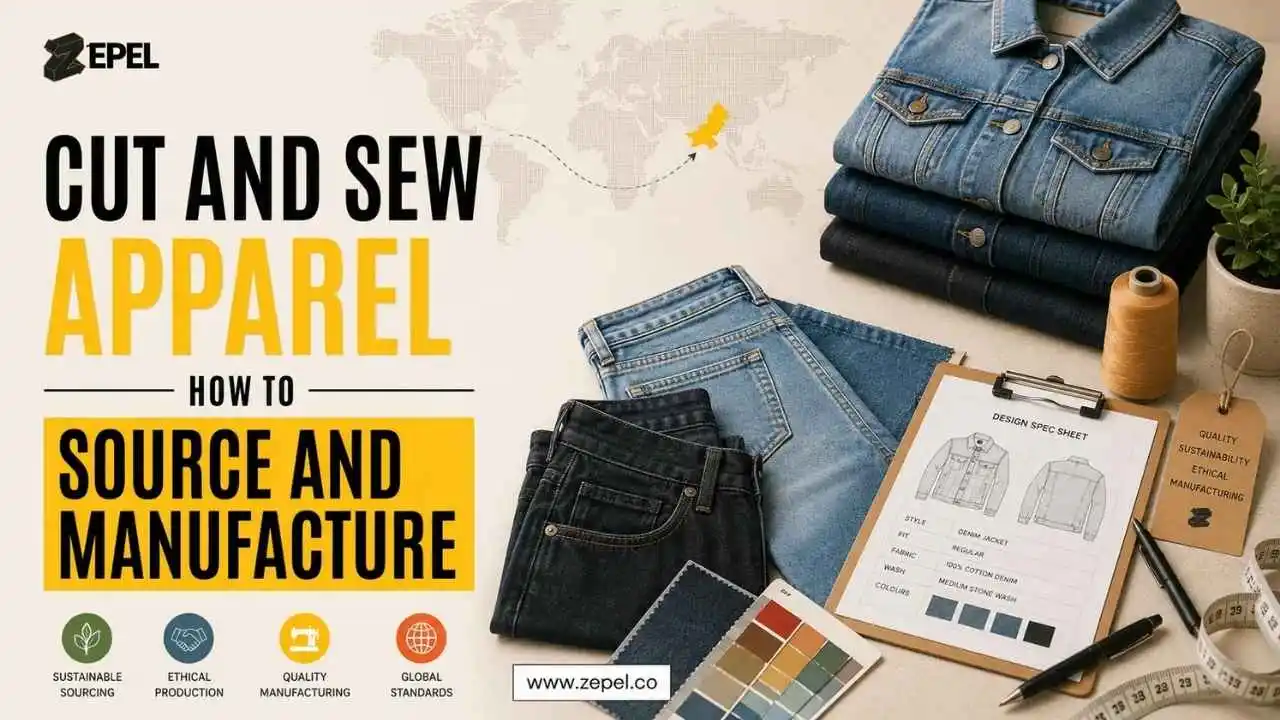
The custom apparel market is projected to surpass $4.2 billion globally in 2026 with a 7.9% CAGR, and the production method driving that growth is cut and sew. Over 60% of emerging fashion brands in the US now prefer custom manufacturing methods over ready-made blanks — and for good reason. Cut and sew apparel gives brands something no blank garment can: complete ownership of the fit, fabric, construction, and identity of every piece they sell. This guide covers everything you need to know about cut and sew — what it is, how the process works, what it costs, and how to find the right manufacturing partner to bring your collection to life.
Cut and sew apparel refers to the process of creating a garment from raw fabric using sewing techniques. The cut and sew process involves cutting the fabric into pattern pieces, which are then sewn together using industrial sewing machines to create the final garment construction.
Think of it as the difference between buying a house and building one from the ground up. With cut and sew, you are the architect of your apparel, controlling every detail from fabric weight and construction to stitching, labels, and finishing. Unlike buying a pre-made blank T-shirt and adding your logo, cut and sew means the garment itself is your product — designed and manufactured to your exact specifications from the first inch of fabric.
Read More: Types of Clothing – A Complete Guide
Cut and sew manufacturing process involves: pattern creation — designing custom patterns tailored to your specifications; fabric cutting — precisely cutting fabric pieces according to your patterns; assembly — sewing all components together to create the finished garment; and finishing — adding final touches like labels, trims, and quality control checks.
In practice, the full process runs as follows:
Before any fabric is cut, your design must be translated into a tech pack — a technical document specifying every measurement, material, construction detail, and finishing requirement. Standardising your spec process and ensuring your team is fluent in creating a complete tech pack is the moment where bringing a style from sketchbook to sewing line is determined — where you hand off to manufacturing is where quality is decided.
A skilled pattern maker translates your tech pack into the physical templates used to cut fabric. Pattern accuracy determines fit — errors at this stage compound through every subsequent step of production.
Before bulk production begins, a prototype must be created. A proto sample is the first draft, created to test the basic silhouette and drape. A fit sample is made in the brand’s base size to test against a live fit model. A pre-production sample — the “Golden Sample” — is made using the exact bulk fabric, precise trims, and final washing processes. The factory floor cannot start mass production without an approved pre-production sample.
Once sampling is approved, bulk fabric is cut according to the finalised patterns and sewn using industrial machines. This stage is where manufacturer capability — skill, equipment, and quality management — matters most.
Garments that fail quality control are either reworked to specification or rejected. This is the last quality gate before the product ships. Labels, hangtags, packaging, and final inspection are completed before goods are dispatched.
Cut and sew is not the right production method for every apparel project. Order complexity, design requirements, and budget all determine whether it makes sense over faster alternatives. Screen printing on blanks is faster, less expensive to start, and appropriate for brands whose primary product is graphic content rather than garment design.
Cut and sew is the right choice when:
Cut and sew apparel costs more than decorating blanks — but the comparison is not straightforward. The relevant question is not “is cut and sew expensive?” but “what does cut and sew cost relative to the brand value it creates?”
Cost factors include:
Cut and sew manufacturing covers a wide range of apparel categories. Common examples include:
Each of these categories requires specific technical capabilities from a manufacturer — which is why vetting manufacturing partners for category expertise is essential before committing to production.
The three criteria that matter most when sourcing a cut and sew manufacturer are: certified ethical compliance, category-specific production capability, and transparent communication throughout the sampling and production process.
A credible cut and sew manufacturer will produce a sample before production begins — any manufacturer unwilling to provide a pre-production sample is a red flag. Beyond sampling, look for factories holding internationally recognised certifications including BSCI, SEDEX, ISO 9001, and OEKO-TEX — these provide independent verification of quality management and ethical standards.
For brands sourcing internationally, Pakistan’s cut and sew manufacturing sector offers a compelling combination of factors: vertically integrated factories handling fabric through to finished garment, low MOQs accessible to growing brands, GSP+ duty-free access to the EU and UK, and a growing ecosystem of certified ethical manufacturers.
Cut and sew apparel is the production method that separates brands building a genuine product from those adding graphics to commodity garments. The process is more complex and more demanding than working with blanks — but the result is a garment that is entirely yours, built to your specifications, from materials you chose, constructed by manufacturers you vetted. For brands serious about product quality and brand identity, cut and sew is not optional. It is the foundation.
Zepel connects fashion brands in the UK, Europe, the US, Australia, and Canada with pre-vetted, certified cut and sew manufacturers in Pakistan — covering denim, knitwear, sportswear, workwear, and womenswear, with low MOQs and doorstep delivery. Book your free sourcing consultation at zepel.co and let us match you with the right manufacturing partner for your collection.

Get in touch