- sales@zepel.co

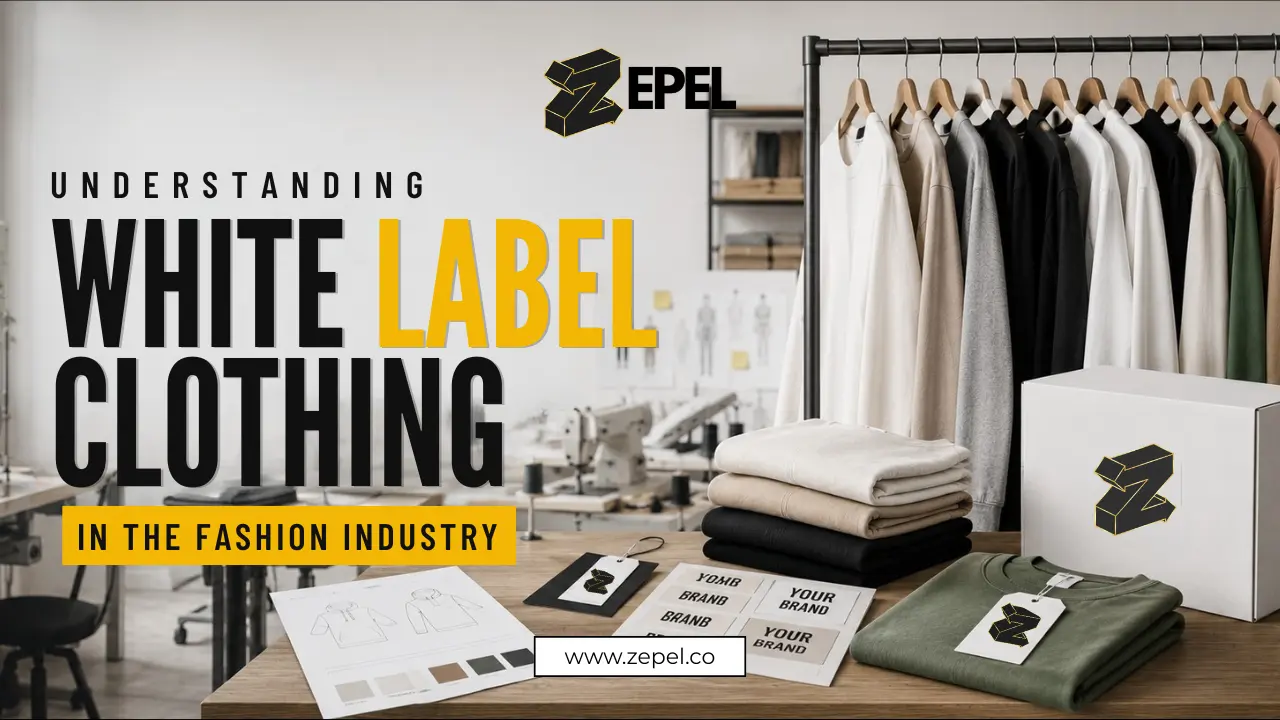
You’ve designed your logo, secured a domain name, and even mapped out your social media strategy. But then reality hits: you need products to sell. Developing custom garments from scratch requires design expertise, fabric sourcing, sampling, manufacturing relationships, and significant upfront investment—resources that many new fashion entrepreneurs simply don’t have. This is exactly why white label clothing has become one of the most popular ways to launch an apparel business.
Instead of spending months developing products and managing complex production processes, brands can sell ready-made garments under their own label, allowing them to focus on branding, marketing, and customer growth. Whether you’re starting an ecommerce store, building a fitness apparel brand, launching a streetwear label, or creating merchandise for your audience, white label manufacturing offers a faster and lower-risk path to market.
In this blog, we’ll explore what white label clothing is, how it works, its benefits and limitations, how it compares to private label manufacturing, and what entrepreneurs should know before launching their own fashion brand.
White label clothing refers to apparel products manufactured by one company and sold under another company’s brand name.
The manufacturer creates the garment, while the brand customizes elements such as:
The final product appears as if it was developed and manufactured by the brand itself. This approach allows entrepreneurs to launch products without investing heavily in design development, manufacturing infrastructure, or complex production management.
The white label process is relatively straightforward.
The first step is to identify suitable clothing manufacturers. Manufacturers typically offer catalogs of ready-made products including:
Businesses select products that align with their target audience and brand positioning.
While the garment design already exists, brands can customize various elements.
This often includes:
These customizations help create a unique customer experience even when the underlying product is standardized.
After product selection and branding approval, the manufacturer handles production.
Many white-label companies also provide:
The finished products are sold through:
At this stage, the business focuses on customer acquisition, branding, and growth.
Looking for a manufacturing partner for your apparel brand?
Launching a fashion business has traditionally required significant capital and manufacturing expertise.
White label manufacturing removes many of these barriers.
Developing custom products requires:
White label production eliminates much of this investment.
This makes it attractive for entrepreneurs looking to test brand ideas without significant financial risk.
One of the biggest advantages is speed.
Instead of spending months developing products, businesses can launch within weeks.
This allows brands to capitalize on trends and validate product ideas more quickly.
Managing production can be overwhelming for first-time entrepreneurs.
Working with experienced custom manufacturers simplifies sourcing, production, and quality management.
As demand grows, businesses can increase production volumes without making major operational changes.
This scalability is particularly valuable for growing ecommerce brands.
Here’s a quick comparison of how white label differs from private label manufacturing.
White Label Clothing | Private Label Clothing |
Ready-made products | Custom-developed products |
Faster launch times | Longer development process |
Lower investment | Higher upfront costs |
Limited customization | Extensive customization |
Ideal for startups | Ideal for established brands |
Shared product designs | Unique product designs |
Businesses often begin with white label production before transitioning into private fashion manufacturing as their brands mature. Learn more about white label vs private label.
Absolutely.
Many successful businesses focus less on manufacturing and more on branding, customer experience, and community building.
Consumers rarely buy products solely because of how they were manufactured.
They buy because of:
This means a strong brand can often outperform competitors even when using similar products.
The ability to create a brand without manufacturing expertise is one of the biggest reasons entrepreneurs choose white label production.
Products are already developed and production-ready.
This significantly reduces time-to-market.
Many manufacturers produce high quality clothes for global markets.
Smaller businesses can access these production capabilities without building factories or managing supply chains.
Entrepreneurs can test new products and market opportunities with less financial exposure.
Rather than managing manufacturing operations, businesses can focus on:
Because multiple businesses may sell similar products, differentiation often depends on branding rather than product design.
Brands have less influence over:
Product quality and availability depend heavily on the manufacturing partner.
This is why selecting reliable suppliers is essential.
The cheapest option is not always the best option.
Poor-quality products can damage brand reputation and customer trust.
Always review samples before placing production orders.
This helps identify quality issues early.
Many businesses underestimate the importance of branding.
Strong branding often becomes the primary differentiator in white label businesses.
Consumers increasingly care about responsible production practices.
Working with manufacturers that support sustainable sourcing can strengthen brand positioning.
Businesses seeking reliable manufacturing partners often benefit from established apparel sourcing solutions and verified supplier networks.
One of the biggest sourcing challenges is identifying suppliers that consistently meet quality and delivery expectations.
Without proper due diligence, brands risk:
The more suppliers involved, the more complex operations become.
Coordinating production, logistics, quality control, and supplier communication across multiple countries requires structured processes and experienced management.
Brands face increasing pressure to demonstrate ethical and environmental responsibility.
Failure to meet compliance requirements can result in reputational damage and operational risks.
Shipping disruptions, customs delays, and freight cost fluctuations continue to affect global trade.
This makes effective procurement logistics planning more important than ever.
When evaluating White-Label Apparel producers, consider:
Assess:
Can the supplier scale as your business grows?
Do they offer:
Look for manufacturers with proven experience in your product category.
Responsible manufacturing practices are becoming increasingly important for both consumers and retailers.
The growth of ecommerce, social commerce, and creator-led brands continues to increase demand for white label manufacturing. Entrepreneurs today can launch fashion businesses faster than ever before. At the same time, consumers are becoming more selective about quality, sustainability, and brand authenticity.
This means future success will depend on more than simply finding products to sell. Brands that combine strong positioning, excellent customer experience, and reliable manufacturing partnerships will be best positioned for long-term growth.
Building a clothing brand no longer requires owning a factory, developing products from scratch, or investing heavily in manufacturing infrastructure. White-Label Apparel has made it possible for entrepreneurs to enter the fashion industry faster, test new ideas with less risk, and focus on what truly drives growth: creating a brand customers connect with.
That said, success rarely comes from simply putting a logo on a garment. The brands that stand out are the ones that combine quality products, strong positioning, reliable manufacturing partners, and a clear understanding of their target audience. Whether you’re launching a streetwear label, a fitness apparel brand, or an online merchandise business, choosing the right production partner can make the difference between a short-lived idea and a scalable fashion business.
Looking to launch or grow your apparel brand? Zepel helps fashion businesses connect with trusted manufacturers, simplify sourcing, and build production partnerships that support long-term growth. Let’s turn your brand vision into a market-ready product.
White label clothing refers to garments manufactured by one company and sold under another company's brand name.
The 3-3-3 rule encourages consumers to create multiple outfits using a small number of clothing items to promote more intentional purchasing habits.
White label brands sell products manufactured by third parties while using their own branding, packaging, and marketing.
Profit margins vary depending on product category, pricing strategy, marketing effectiveness, and customer acquisition costs. Many successful brands achieve healthy margins through strong branding and niche positioning.

Get in touch